

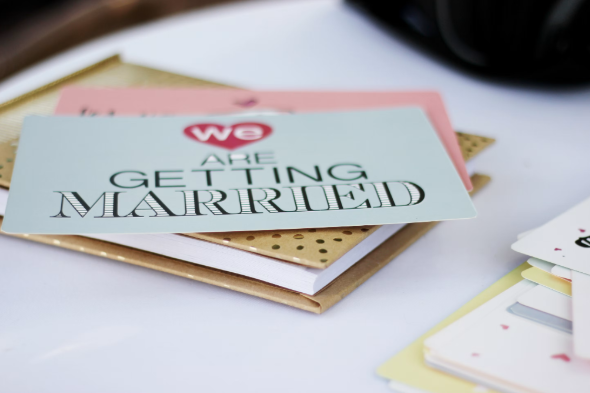
Every year the shehnai goes quiet for a few months, and then one date brings it back. In 2026 that date is Dev Uthani Ekadashi, which falls on November 20. Printers get busy again, families dig out guest lists, and a blank space on the card starts to bother someone.
That space is where a couplet belongs. A good two line shayari tells guests what the day feels like before they read the venue or the muhurat. Many couples now plan the whole celebration around a theme, from a quiet nikah lunch to a sangeet night with quiz rounds and light games, the sort of playful format people also know from a show like crazy time online, and the card is the first hint of that mood.
How to Pick a Couplet That Fits the Card
Start with the card, not the poetry. A heavy gold foil invitation can carry a formal Urdu couplet, while a pastel digital card works better with simple Hindi written in Roman letters. Short lines of about twelve to eighteen words sit comfortably under the names without crowding the date.
Next, think about who opens the envelope. A grandmother in Lucknow may enjoy a line with words like “ishq” and “muqaddar”, whereas college friends will smile at something lighter. If the card goes to both groups, choose a verse that is warm and plain, and keep the clever one for the sangeet reel.
| Card style | Couplet tone | Suggested length |
| Traditional foil card | Formal, Urdu flavoured | Two lines |
| Pastel minimalist card | Soft, conversational | One or two lines |
| Digital invite on WhatsApp | Playful and short | One line |
| Handwritten family note | Personal and blessing based | Four lines |
Love Shayari Ideas Ready to Print
The couplets below were written here, so borrow them. Swap in a nickname or a shared memory so each line carries your voice, because a verse that every cousin has already seen on three other cards loses its charm fast. Read each line aloud twice, once at normal speed and once slowly, the way an emcee might at the reception, to hear whether the rhythm holds.
“Do dil, ek dagar, ek hi manzil, aaj se hamara safar shuru hota hai.” This works well on the main panel of a card, right above the names. Another option is “Tumhare saath jo chai thandi ho jaye, wahi sabse meethi yaad hai.” A small domestic joke like this suits couples who met over long phone calls.
Lines for the Main Invitation
Keep these dignified. Mention blessings, togetherness and the family gathering, and let the verse carry the emotion while the details of venue and time stay in plain print below it. A line such as “Aapki duaon ke saath, hum ek naya ghar basane chale hain” thanks elders and announces the event in one breath.
Avoid stuffing three couplets on one page. One verse, set in a slightly larger font, gives the eye a place to rest. On a typical A5 card, about thirty percent of the face is best left empty.
Lines for Mehendi, Haldi and Sangeet Cards
Side events invite a lighter touch. For a haldi card, something like “Peela rang chadhega, pyaar aur gehra hoga” feels cheerful without trying too hard.
Sangeet cards can carry a rhyming dare, such as “Aana zaroor, naachna bhi hai, kaun jeetega, ye raaz abhi hai.” Guests read it aloud, which is exactly the point.
A Small Checklist Before You Send It to the Printer
Last winter a Jaipur couple discovered, two days before printing, that their Urdu couplet had a missing nukta that changed a word entirely. A cousin caught it only because she read the proof aloud. Do the same with any elder who knows the language well.
Check these three things before approving the proof:
- The spelling of every shayari word, including small marks like the nukta
- Line breaks, so a couplet never splits awkwardly across two lines
- The font, since some decorative scripts blur diacritics once ink hits paper
Order a single printed sample before the full run of two hundred cards. Hold it in daylight, because gold foil and pale pastel inks can look quite different under a shop’s tube light, and a faint line that seemed elegant on screen sometimes disappears completely. Ask the printer to confirm the paper weight too, since a thin sheet lets the back print show through. A 250 GSM matte stock feels substantial in the hand, while anything under 150 GSM tends to look flimsy once the envelope has travelled through the post. Allow a few extra days if envelopes need lining by hand too.
Timing matters too. With the season reopening after November 20, many printers see queues build by the first week of December, so ordering in the middle of November usually saves a rushed fee. Share the final couplet with the whole family in one group message and ask for corrections by a fixed evening. It sounds fussy, yet it prevents the classic problem of an uncle suggesting a new verse after the plates are already made, and it keeps the planning calm for everyone involved in this season. Keep a digital copy of the approved proof, too, so reprints for late guests match the first batch exactly, and nobody has to guess which version was final.
