

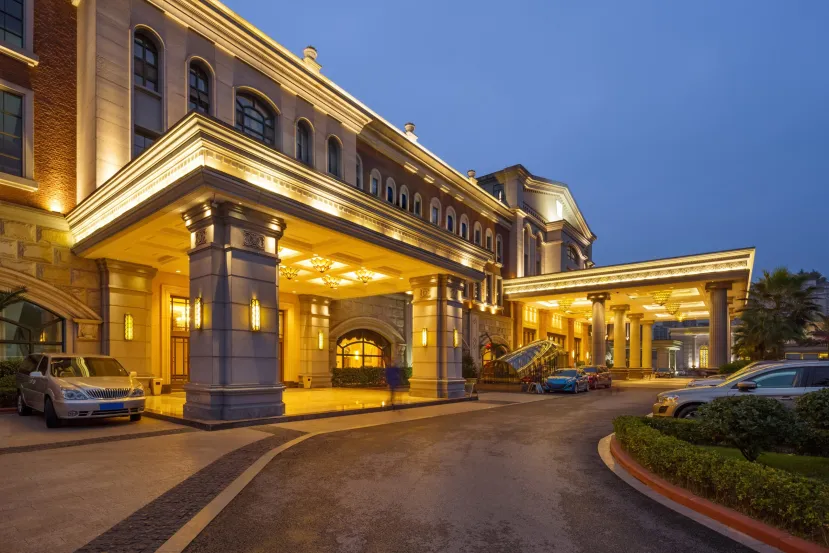
We talk a lot about first impressions between people. The way someone holds your gaze, the warmth in a greeting, the little courtesies that tell you whether you are wanted in a room. Businesses make first impressions too, and most owners think that moment happens at the front door. It does not. It happens about forty seconds earlier, when a customer turns off the street and tries to figure out where to park.
That forty seconds sets the mood for everything that follows. A clean, clearly marked lot says “we thought about you before you arrived.” A faded, confusing one says the opposite, and no amount of nice lighting inside will fully undo it.
Here are the small, often overlooked details that make a business feel welcoming from the moment someone pulls in.
1. Lines you can actually see
Parking stripes fade. Sun, tires, rain, and street sweepers grind them down until the lot becomes a guessing game. Customers park crooked, take up two spaces, or block a lane without meaning to, and then feel awkward about it. That low-level stress walks in the door with them.
Fresh, bright lines remove the guesswork. People park quickly, confidently, and with room to open their doors. In hot, sunny climates the wear happens faster than owners expect. Companies that handle parking lot striping in Phoenix typically use two-coat, UV-resistant traffic paint precisely because the desert sun chews through a single thin coat in a season. If your lot is in a sunny region and the lines look tired after a year, that is normal, and it is fixable in a single overnight job.
2. An obvious path from the car to the door
Once parked, a customer should know where to walk without thinking. Crosswalks, painted walkways, and directional arrows do that quietly. They also keep pedestrians out of the way of cars backing up, which matters more than most people realize in a busy retail lot.
If your building has multiple entrances, a few painted arrows and a clearly marked main entry path save visitors from the small humiliation of tugging on a locked door.
3. Accessible parking that is actually usable
Accessible spaces are not just a legal requirement. They are a message. A space with a faded symbol, a missing access aisle, or a curb ramp blocked by a planter tells customers with mobility needs that they were an afterthought.
Proper accessible parking includes a marked access aisle beside the stall, a clear route to the entrance, and signage at the right height. When those are done well, wheelchair users, parents with strollers, and older visitors all feel considered. It is one of the most meaningful things a business can do for the people who notice it most.
4. Clean curbs and honest colors
Curb paint is a small thing with a big signaling effect. A crisp red fire lane, a yellow no-parking curb, a blue accessible zone: these colors tell people the rules without a single sign. When they are faded or chipped, people ignore them, and the lot gets chaotic.
Repainting curbs is cheap relative to almost any other exterior improvement and it makes the whole property look maintained.
5. Lighting that reaches the far corners
A welcoming lot at noon can feel unsafe at 8 p.m. Walk your own lot after dark. If there are corners where you would hesitate to park alone, your customers already avoid those spaces. Adding or repairing a few fixtures is often all it takes.
6. Landscaping that stays in its lane
Overgrown shrubs that block sight lines, trees dropping sap on cars, and planters creeping into stalls all chip away at the experience. Trim things back so drivers can see pedestrians at the corners, and keep greenery from swallowing your accessible spaces.
7. No surprise potholes
A pothole near the entrance is the parking lot equivalent of a broken step. Customers will remember it, and some will remember it when deciding where to go next time. Patching and sealing small cracks early prevents them from becoming the kind of damage that requires a full repave.
8. Signage that speaks plainly
Every sign in your lot should answer a question a customer actually has: Where do I enter? Where do I park? Where is the door? Is this space for me? Skip the clutter. A few clear signs are far more welcoming than a dozen contradictory ones.
9. A lot that matches the promise inside
This is the part owners miss most often. If you run a spa, a boutique, a dental office, or a cafe that prides itself on a calm, cared-for atmosphere, a cracked and unmarked lot contradicts that promise before the customer has seen a single thing you worked on. The outside should be a preview of the inside.
Why this matters more than it seems
People rarely say “I loved how easy it was to park.” They just come back. And they rarely say “the parking lot was a mess” either. They just quietly go somewhere else next time. The parking lot is one of the few parts of a business that every single customer experiences, and one of the few that owners almost never look at with fresh eyes.
So take the long way in tomorrow. Drive into your own lot like a stranger. Notice what feels easy and what feels uncertain. Most of what you find can be fixed for less than a week of marketing spend, and it will keep working for every customer who arrives after that.
A welcoming business is not built on grand gestures. It is built on a hundred small courtesies, and the first one happens before anyone has said hello.
