

Love often feels difficult to predict.
Two people may meet by accident. A small choice can change a relationship. One message may bring people closer, while one missed moment can send them in different directions. Romantic poetry has long used luck, fate, and chance to describe this uncertainty.
Games of chance offer poets a clear set of symbols for the same idea.
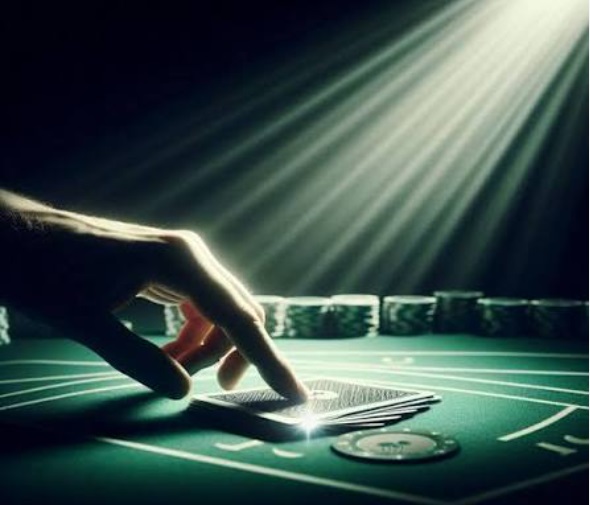
A shuffled deck hides the next card. A die can fall on any side. A spinning wheel moves toward a result that no one can control once it is in motion. These objects turn uncertainty into something physical and easy to picture.
That makes them useful poetic tools.
A poet can compare a new romance to drawing an unknown card. A difficult choice can become a roll of the dice. An unexpected meeting can feel like luck. A lasting bond may seem guided by fate.
These images work because readers already understand their basic tension. The outcome matters, but it remains hidden until the final moment.
In romantic poetry, that tension mirrors a familiar emotional truth: people can choose how they act, but they cannot fully control what love will become.
Chance Gives Love Poetry A Clear Physical Language
Romantic feelings can be hard to describe because they are often mixed and uncertain. Games of chance give poets concrete objects that make those feelings easier to picture.
A card can stay hidden until the final second. Dice can tumble across a table before they stop. A wheel can spin while everyone waits for the result. Each image turns uncertainty into an action.
That is useful in love poetry.
A poet can describe a new relationship as an unopened card. A sudden attraction can feel like a lucky draw. A painful breakup may resemble a result that changed everything in one moment.
Modern digital language can create the same effect. A phrase such as desiplay online casino immediately suggests chance, risk, and an unknown result. In a poem, that kind of image can work as a cultural reference to uncertainty rather than as a literal setting.
The strongest metaphors stay simple.
They do not explain every detail of the game. They take one clear feature—uncertainty, risk, or surprise—and connect it to an emotion the reader already knows.
That is why chance-based imagery fits romantic poetry so well. Love rarely follows a visible script, and the metaphor gives that uncertainty a shape.
Luck Turns Unexpected Meetings Into Meaningful Moments
Romantic poetry often treats an unexpected meeting as more than an accident.
Two people enter the same café. They choose nearby seats. A delayed train puts them on the same platform. One small event creates a connection that neither person planned.
Poetry can describe such moments through luck.
Luck gives an ordinary event extra weight. The meeting still happens by chance, but the poet can present it as a rare result among thousands of other possible outcomes.
This idea works because readers understand how easily the moment could have gone another way.
A person could have arrived five minutes later. They could have chosen another street. They could have stayed home. Each alternative creates a different path.
Romantic poetry compresses all those possibilities into one striking thought: out of everything that could have happened, these two people met.
Games of chance use a similar structure as a metaphor. Many outcomes remain possible until one becomes real. The result feels important because all the other possibilities disappear at that instant.
Luck therefore gives poets a simple way to describe the fragile beginning of love. It turns coincidence into a moment that feels rare, surprising, and worth remembering.
Fate Gives Coincidence A Larger Meaning
Luck describes an unexpected event. Fate gives that event a sense of purpose.
This difference matters in romantic poetry.
A chance meeting can become more powerful when the poet suggests that two people were always moving toward the same point. Separate roads, choices, and delays suddenly seem connected.
Poets often express this idea through images of destiny.
Two paths cross. Two stars align. A shuffled deck produces one unlikely card. The image suggests that countless other outcomes were possible, yet one specific result appeared.
Fate also creates tension because people cannot see it in advance.
Characters may miss each other, separate, or make choices that seem final. The reader can still feel that an invisible thread connects them. This makes later reunions carry more emotional weight.
The metaphor works best when fate remains uncertain.
If every event feels fixed, the characters lose their sense of choice. Strong romantic poetry balances both forces: people make real decisions, while chance places unexpected possibilities in front of them.
That balance makes fate feel less like a rigid script and more like a hidden pattern that only becomes visible when people look back.
Risk Makes Romantic Choices Feel More Intense
Love poetry often becomes stronger when a choice has an uncertain result.
A person may confess a feeling without knowing the response. Someone may send a message after months of silence. Another person may leave a familiar life to follow a relationship whose future remains unclear.
These moments contain emotional risk.
Games of chance provide a compact metaphor for that feeling. Once a card is turned or dice leave the hand, the result cannot be changed. A romantic decision can create similar tension. The speaker acts, then waits to discover what follows.
The metaphor works because risk gives a choice weight.
If success were certain, the decision would require little courage. Uncertainty makes the moment memorable. The person must act without knowing whether the result will bring joy, disappointment, or something unexpected.
Poets can express this tension without describing complex rules. A single image—a hidden card, a spinning wheel, or dice in an open hand—can capture the pause before an important choice.
In this way, risk becomes a measure of emotional importance. The more uncertain the outcome feels, the more meaningful the decision can seem.
Chance And Fate Work Best When They Stay Human
Chance metaphors become powerful when they serve the emotion rather than dominate the poem.
A poet does not need to explain cards, dice, or probability. The image only needs to sharpen the human moment.
A hidden card can represent an unanswered question. A roll can suggest a decision with no guaranteed result. Luck can describe an unlikely meeting. Fate can connect events that seemed unrelated at first.
The human response remains the center of the poem.
This is especially important in romantic writing. Readers care about the person who waits for an answer, remembers a meeting, or wonders how one small choice changed everything. Chance gives that feeling a physical form.
Good metaphors also leave room for interpretation.
A lucky draw might suggest joy to one reader and fragile fortune to another. Fate may feel comforting in one poem but impossible to escape in another. The same symbol can carry different emotional weight depending on its context.
That flexibility explains why luck, risk, chance, and fate appear so naturally beside love. All of them deal with an uncertain future.
Romantic poetry turns that uncertainty into meaning by asking a simple question: what happens when the heart must move forward before it knows the result?
Love And Chance Share The Same Uncertain Future
Love, luck, and fate belong together in poetry because each points toward something not yet known.
A relationship can begin with an accidental meeting. It can grow through deliberate choices. It can also change because of events that neither person controls.
Games of chance provide poets with simple images for this mixture.
A hidden card represents an unknown future. Dice capture the instant before a result becomes fixed. Luck gives coincidence emotional weight. Fate suggests that separate events may form a larger pattern.
Yet the metaphor works because love is never reduced to a game.
People still choose whether to speak, wait, leave, forgive, or return. Chance creates the situation, but human decisions give that situation meaning.
This balance gives romantic poetry much of its tension. The future remains uncertain, while the feelings remain real.
That is why images of chance have such lasting power. They turn an invisible question into something readers can almost hold in their hands.
Love asks people to move forward without knowing exactly where they will land. Poetry takes that uncertainty and gives it a language of luck, risk, choice, and fate.
